Communicating care for environmental, economic, & social justice
Care for the environment, economy, and social justice converge in sustainability, an international and interdisciplinary ideal that shapes a range of attitudes, behaviors, practices, and systems.
As for stories—nothing may be more fundamental to life than perhaps, well, life.
Through studying, hearing, amplifying and co-creating stories in ways that are attuned to power, culture and ecology, the Sustainability and Storytelling Lab (or SAS Lab, affectionately called the “sass” lab, note below) aspires to hold unsustainable acts accountable and to make sustainable futures possible.
We facilitate high-impact learning for students through courses, publications, and community-based research that bridge theory and practice. The SAS Lab’s practices move through face-to-face interactions and across media, including podcasting and online story mapping. Our mission is enacted through collaborations across CU Boulder, as well as with off-campus partners locally and globally.
Objectives: The broad objectives of the Sustainability & Storytelling Lab include:
- Advocate for sustainability and storytelling opportunities as vital to environmental, economic, and social justice, as a matter of procedure, distribution, and restoration
- Increase knowledge about sustainability, including matters related to climate, toxic pollution, public health, and just transitions
- Publicize sustainable and unsustainable acts, as well as stories about them
- Mitigate communication’s capacity for harm
- Develop praxis (theory/practice) about storytelling as constitutive of culture and power relations, whether in person at a specific location or through multi-media
- Hone skills in researching, analyzing, teaching, learning, collaborating, and creating
- Foster capacity building for all involved in or with the lab
- Energize networks among people dedicated to sustainability, including faculty, staff, students, and partners off-campus
- Contribute to the greater good, on campus, in the state, nationally, and internationally
- Communicate care for ourselves, others, and the world
Colorado Environmental Justice Digital Storytelling Project
The Colorado Environmental Justice Digital Storytelling Project partnered with the Colorado Department of Public Health and Environment (CDPHE) to pilot five StoryMaps, which now can be found on the CDPHE Enviroscreen StoryMap page. We won the 2023 Civic Achievement Award from the Campus Sustainability Awards committee at the University of Colorado Boulder, and the San Luis Valley StoryMap was featured by Colorado Resiliency Office, Annual Progress Report 2022, p. 12, as a Community Spotlight for Supporting Strategies that develop & deploy community engagement & civic capacity tools, strengthen local resilience planning, & integrate equity. We published about the pilot in the journal Environmental Justice.

Communicating Care Podcast
Tune into the Communicating Care Podcast where we talk about the ways environmental and climate justice advocacy are motivated by, express, and foster care. Publicly launched in 2022, on this podcast we listen more deeply to people who have made headlines for making a difference to learn from their insights for successful storytelling, organizing, and thinking about plastics, climate, social justice and much more. This show became the basis of our director’s award-winning book, Beyond Straw Men: Plastic Pollution and Networked Cultures of Care (University of California Press, 2023). Publishing Season 3 currently, the podcast continues to share ideas from cutting edge researchers and advocates on just transition initiatives, storytelling practices, and how truly transformative systemic change occurs.

Environmental Communication Editing, Research & Publishing
Professor Pezzullo coedits a University of California Press book series on Environmental Communication, Power & Culture, as well as serves as Editor of the international and interdisciplinary journal Environmental Communication. She also is editing the 7th edition of her coauthored textbook, Environmental Communication & the Public Sphere (forthcoming August 2025). She regularly works with colleagues and students on how to publish grounded and insightful research. In February 2025, we will host Dr. Angela Aguayo on youth-led documentary storytelling and Dr. Constance Gordon on powermapping and climate justice storytelling. Fall 2024, students learned from media producer Corinna Robbins and scholar/author/media producer Dr. Catalina de Onís.

Imagining Just Transitions
Transitioning our energy system away from fossil fuels changes more than energy infrastructure—it impacts workers, communities, and cultures. The Sustainability and Storytelling Lab is proud to partner with NGOs such as The Just Transition Alliance and Once and Future Green to amplify their expertise and co-create stories as part of what we’re calling our Imagining Just Transitions project. Director Prof. Phaedra C. Pezzullo also contributed to the Pulitzer Center’s Report on how journalists globally might improve storytelling on this vital topic for conversation, Climate Change and Labor: The media landscape.

Preventing Plastic Pollution
In addition to the podcast and award-winning book (noted above), we work globally and locally to reduce plastic pollution, from co-authoring policy to providing advice on public engagement planning. We work across staff, administrators, students, and faculty on campus towards solutions to reduce plastic waste. We continue to bring together the latest research with the expertise of waste workers and managers to strive for zero waste. We are pleased to be in step with our Chancellor on these efforts. The director also went to the Dominican Republic in 2024 as part of a NSF grant and continues to network globally.
Creative Climate Communication Consulting & Capacity Building
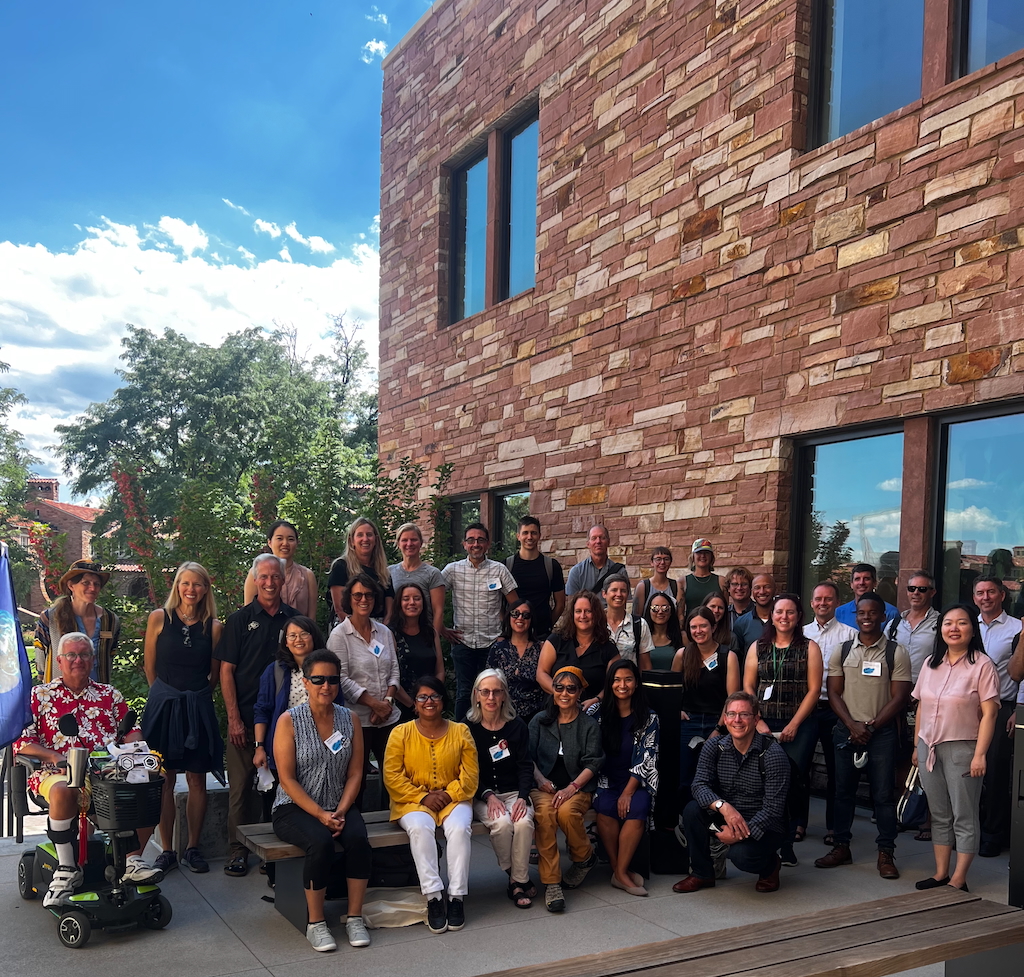
Some of our work happens through Interlocking Directorate Organizations, Inside the Greenhouse and C3BC. Together we have co-advised & co-facilitated creative climate-related trainings for arctic scientists, climate scientists, educators across campus, government employees, journalists, and media creatives. For example, for Project Drawdown Climate Solutions for Kids, Pezzullo facilitated a peer review process by fourth graders for fourth graders on how to talk about & represent climate solutions with the greatest impact.
What We Do:
The SAS Lab enacts our mission through collaborations across campus, as well as with communities and institutions. We co-create storytelling across media, including a podcast, ArcGIS StoryMaps, and community engagement face to face, as well as archival research and analysis of texts. Reflecting our expertise areas in communication, media, environmental and ethnic studies, our work involves a range of research approaches and practices to unsustainability and sustainability, including:
- documenting tours of waste/wasted infrastructure hosted by workers & communities mapping their expertise about everyday life
- listening to & amplifying the voices of communities most impacted by unsustainability, as well as advocacy, governance, & operations experts (on & off our podcast)
- co-creating storytelling opportunities across media platforms and social networks to foster more sustainable imaginings
- consulting with and increasing the capacity of governments, NGOs and media institutions to achieve sustainability goals
- critically interrupting unsustainability, particularly environmental and climate injustices, and speaking up for more sustainable principles and actions to the best of our abilities
- collaborating across faculty, students, staff, and administration at CU Boulder to network and catalyze sustainable education, research, and service for the future
In Spring 2025, we’re co-sponsoring Dr. Angela J. Aguayo’s visit to campus, a compelling documentary scholar and filmmaker: https://vast.colorado.edu/angela-aguayo/.
Annual report (Forthcoming May 2025). Contact us if you are interested in working with us for credit and an internship stipend–or if you would like to become a community partner: saslab [at] colorado [dot] edu
Undergraduate students: starting in January 2025, the SAS Lab is providing both credit and stipend opportunities for studies with the goal of doing so every semester. We welcome honors thesis projects, ENVS interns, COMM interns, and more. The SAS Lab currently has an open door policy across undergraduate and graduate students actively working on our many initiatives; contact us if you want to discuss if joining is appropriate for you: saslab [at] colorado [dot] edu
Graduate students: If you would like to work with Prof. Pezzullo, she can direct MA and PhD students in the Department of Communication and Media Studies; she also can co-direct in Environmental Studies and is affiliated with Ethnic Studies. Of course, when appropriate, she has served on committees across campus and campuses as well. Funding at CU Boulder is provided through the departments; the SAS Lab has no funding for graduate student lines or postdoctoral students at this time. Again, the SAS Lab currently has an open door policy across undergraduate and graduate students actively working on our many initiatives; contact us if you want to discuss if joining is appropriate for you: saslab [at] colorado [dot] edu
Our nickname: In North American cultures, “sass” can imply disrespect, but it also signifies garden vegetables grown for food and audacious and bold speech or behavior. Affectionatey called the SAS (pronounced “sass”) Lab, one might say we encourage nourishing attitudes–as well as challenging the status quo–through smart, lively, and courageous acts in the face of complex and often stressful challenges. When carelessness abounds, sass offers an expression of playful care—for ourselves, others, and the planet.
Funders include: PACES, the College of Media, Communication, and Information, as well as the Department of Communication at CU Boulder, deCastro grants, Waterhouse Family Institute, and donations from generous mission-aligned people who want a more just and sustainable future.
 phaedracpezzullo.com